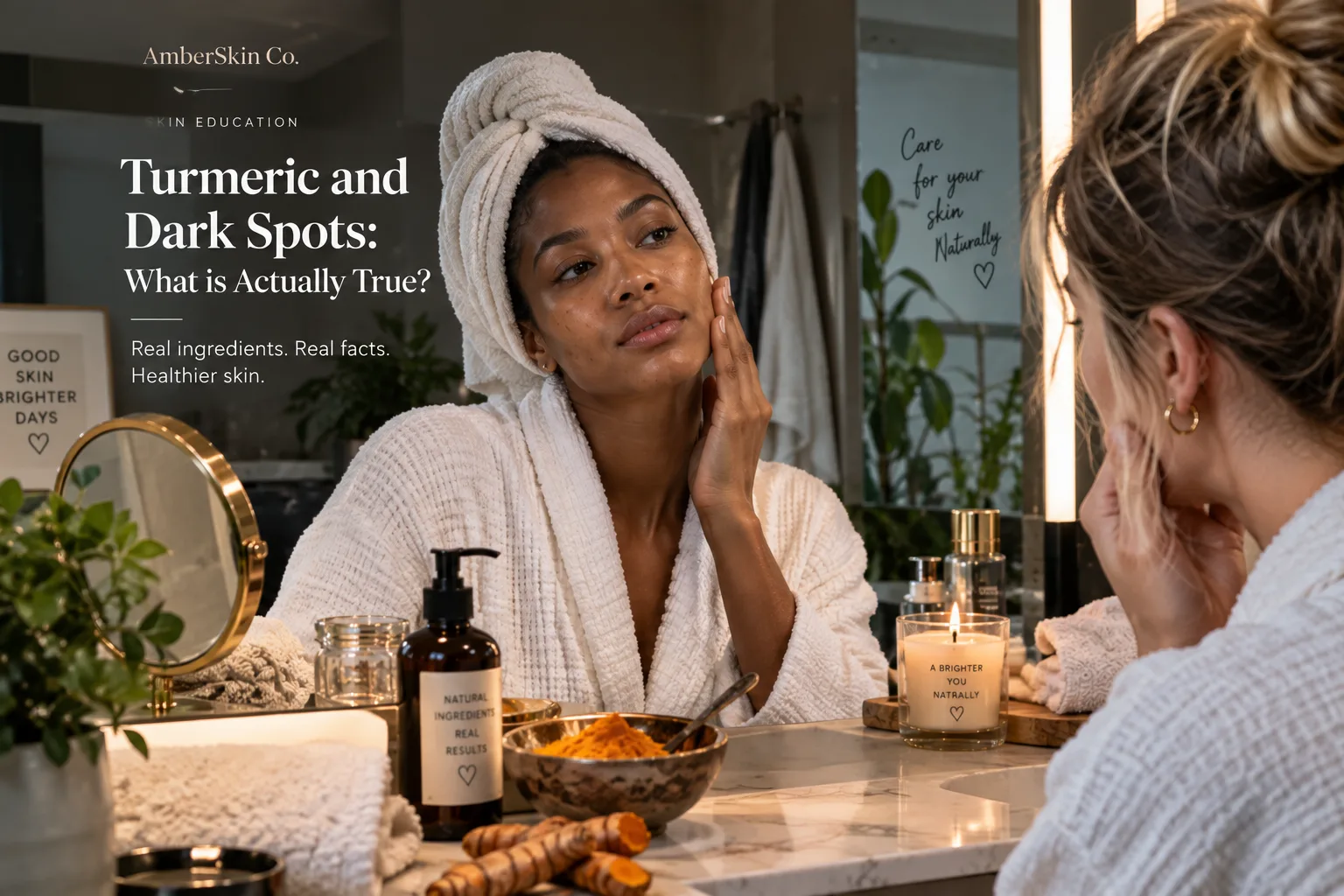
Search in Dutch for turmeric and your skin and, within two clicks, you will read that turmeric has "excellent bleaching properties" and "inhibits melanin production". It is on recipe blogs, on DIY sites, and on shops that sell turmeric.
We sell turmeric. We do not say it.
Why not
In the EU a cosmetic may not promise to lighten your skin, fade dark spots or even out your skin tone. That is not a formality. A product promising it is presenting itself as something other than a cosmetic, and different rules apply — rules no face cream meets.
We have taken products off sale because that was printed on the carton. Not reluctantly: because it was not true.
What turmeric actually is
Turmeric is a root, and curcumin is the yellow compound in it. It is an antioxidant, it is a dye, and it has been used on skin for a very long time. That is not nothing, but it is not a promise about your complexion.
What you see in practice is this: skin that is well looked after catches light differently. It reads fresh instead of dull. That is about how light falls on your skin, not how much pigment sits in it.
Turmeric will not lighten your skin. It makes it look lit. That is different.
The DIY mask, and the part usually left out
Most recipes you will find are turmeric powder and lemon juice. There is a problem in that which is rarely mentioned.
Lemon juice on skin, followed by sunlight, can cause a real burn. It is called phytophotodermatitis, and it is not a rare allergy — it is a predictable reaction between compounds in citrus peel and juice and UV light. Blistering, and afterwards sometimes months of a dark patch where the burn was.
That is a bitter outcome for a mask you used to get rid of marks.
If you want to mix something yourself, leave the lemon juice out. Yoghurt or honey work perfectly well as a base and carry none of that risk.
And the yellow
Turmeric is a dye. That is the whole reason it is yellow.
On skin it usually fades within a day. On your towels, your flannels and the grouting round your basin it is a different story. Use old towels, rinse the sink straight away, and expect a faint cast on lighter skin to linger for a few hours.
Products made with turmeric are usually better behaved than powder from your kitchen cupboard: the concentration is lower and something in them helps it rinse. That is the real difference between a mask you buy and one you mix — not that it works better, but that it cleans up.
What we sell, and what for
Our turmeric products are for cleansing and looking after skin, and for making it look fresh.
The Turmeric & Niacinamide Cleansing Foam is where most people start: it rinses clean and leaves no colour. The Turmeric Clarifying Cream is the daily care afterwards, and the Turmeric Cleansing Oil is for days you wear make-up.
If your skin reacts easily, do not start with turmeric — start with the Centella Calming Essence. Turmeric is a spice with colour and scent, and that is not the right opening for every skin.
What does help with pigment
If dark patches genuinely bother you, the honest list is short and turmeric is not on it. Sun protection, every day, including in the Netherlands and including in winter — that is by far the largest effect you can have yourself, because sun is what darkens existing marks. And a dermatologist, for anything that changes or that you do not trust.
We do not sell sun protection and we do not give medical advice. That seems better to us than pretending a yellow cream can do that job.