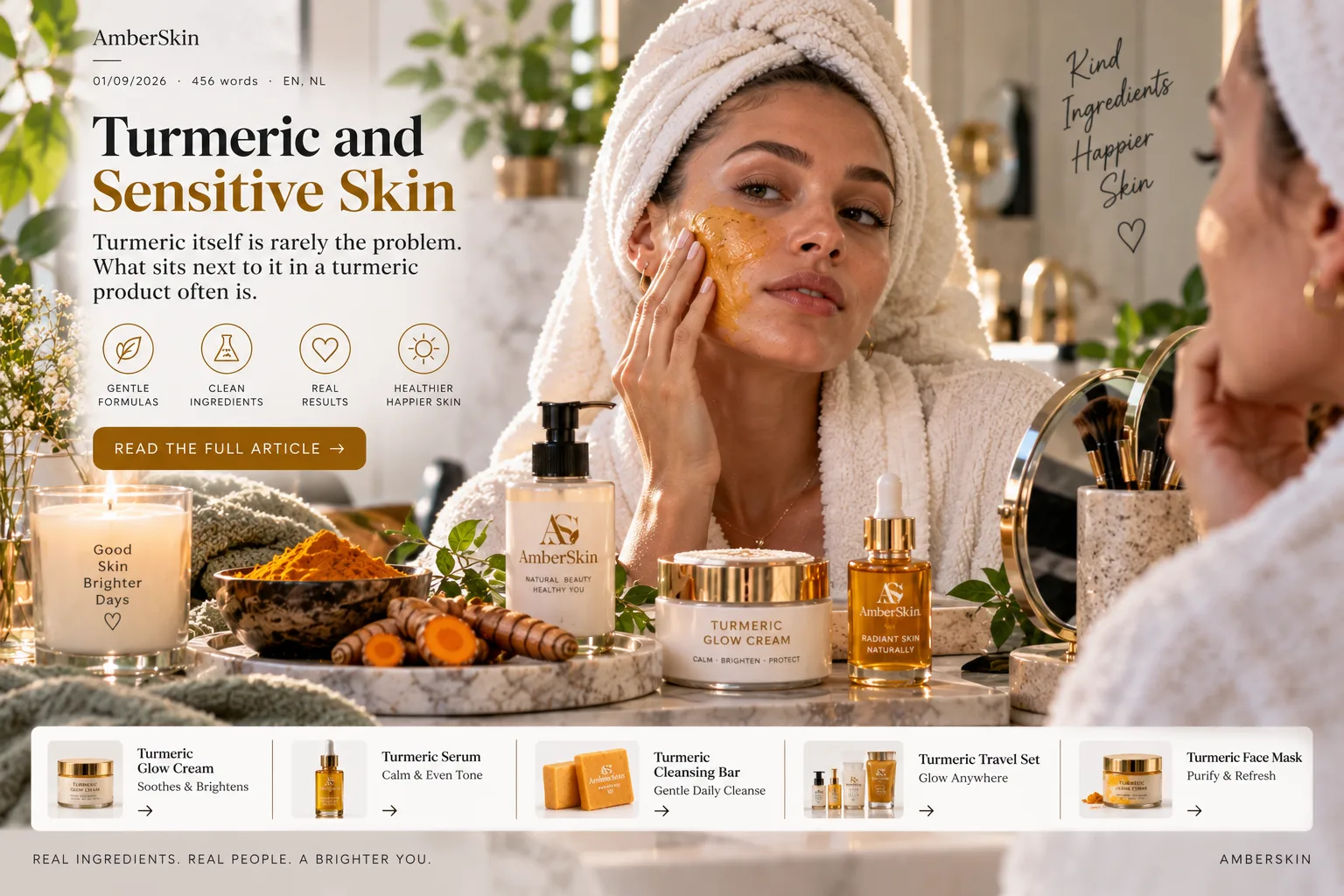
La cúrcuma tiene buena reputación entre quienes tienen piel sensible, y en gran medida se la merece. Pero esa reputación es sobre la cúrcuma. Los productos en los que se incluye la cúrcuma suelen contener muchas otras cosas.
Esto es lo que hay que mirar.
La cúrcuma en sí
La alergia de contacto a la cúrcuma existe, pero es poco frecuente. Para la mayoría de las personas, el extracto de raíz de cúrcuma en un producto cosmético es suave.
Dos puntos prácticos:
Mancha. La cúrcuma es amarilla. En pieles claras puede dejar un tono amarillento pasajero, y puede teñir tejidos claros. Eso no es una reacción: es pigmento.
Se desconoce la concentración. Casi ningún proveedor indica cuánta cúrcuma contiene el producto. "Contiene cúrcuma" puede significar cualquier cosa. Los nuestros no son la excepción: la Crema de Cuello y Rostro con Cúrcuma y el Aceite Limpiador con Cúrcuma tampoco indican un porcentaje, y preferimos decirlo así antes que dar a entender que lo sabemos.
Lo que suele acompañarla
Aquí es donde realmente hay que prestar atención.
Extracto de cítricos. La cúrcuma suele combinarse con limón. Los extractos cítricos pueden causar escozor en piel sensible.
Ácido kójico. Muy habitual en los jabones de cúrcuma. Está permitido en la UE hasta un 1% en productos para rostro y manos, pero los proveedores rara vez indican ese porcentaje. El ácido kójico también puede provocar dermatitis de contacto en personas sensibles.
Fragancia. Con frecuencia es la verdadera causa de una reacción a un producto "natural". Si tu piel reacciona con facilidad, la Esencia Calmante de Centella y la Crema Calmante son las dos de nuestra gama pensadas desde el principio para eso, en lugar de adaptadas después.
Aceites esenciales. "Natural" no significa "suave". Algunos aceites esenciales son activamente irritantes.
Haz una prueba de parche
Siempre, con cada producto nuevo, incluso uno suave.
- Aplica una pequeña cantidad en la cara interna del antebrazo.
- Déjalo actuar 24 horas. No lo enjuagues.
- ¿No hay enrojecimiento, picor ni ardor? Entonces puedes probarlo en el rostro.
Si reaccionas: detente y enjuaga. Si la irritación persiste, consulta a tu médico.
Cuándo evitar la cúrcuma
- Si tienes una alergia conocida a la cúrcuma o al jengibre (misma familia botánica).
- Sobre piel dañada o inflamada.
- Si estás usando un tratamiento cutáneo prescrito: consúltalo antes.
Lo que hacemos nosotros
Publicamos la lista de ingredientes cuando el proveedor la facilita, y lo decimos con claridad cuando falta. Por el momento, exactamente un producto de nuestra gama publica una lista INCI completa —la Espuma Limpiadora de Cúrcuma y Niacinamida— y en cada página donde no es posible hacerlo, así se indica.
No es algo cómodo de anunciar, pero es útil. Con piel sensible, una marca que dice "no lo sabemos" te sirve de más que una marca que imprime "100% natural" en la caja.